Ingredients
Method
Prepare the Sauce
- In a small pot, add palm sugar and cook over medium heat until it melts and caramelizes into a darker brown color. Stir it occasionally to avoid burning the edges.
- Once caramelized, turn off the heat and carefully add water; it will bubble vigorously. When bubbling subsides, add fish sauce and tamarind paste, swirling them to combine.
Make the Shrimp Oil (Optional)
- Peel and devein the shrimp, setting the heads aside. In a wok, add your neutral oil and shrimp heads, cooking over medium heat until the heads turn golden brown and smell aromatic.
- Strain the oil into a heatproof bowl, discarding the shrimp heads.
Cooking the Pad Thai
- Heat the wok on high, adding the shrimp oil (or neutral oil) to coat the bottom. Toss in the shrimp and sear until they're halfway cooked, then flip to finish cooking; remove and set aside.
- Turn down the heat, adding more oil if necessary, then toss in shallots, garlic, tofu, and chili flakes. Cook until the shallots are translucent, about 2 minutes.
Noodle Time
- Increase the heat to high again, adding the soaked noodles, sauce, and water, stirring until the liquid has been absorbed.
Eggs & Noodles Unite
- Push the noodle mixture aside and create a space in the wok. Add a bit more oil, then crack in the eggs and scramble them lightly.
- Once they’re cooked, mix in the noodles, checking for doneness and adding water for tenderness if needed.
Final Touches
- Turn off the heat and fold in the shrimp, bean sprouts, garlic chives, and half of the chopped peanuts.
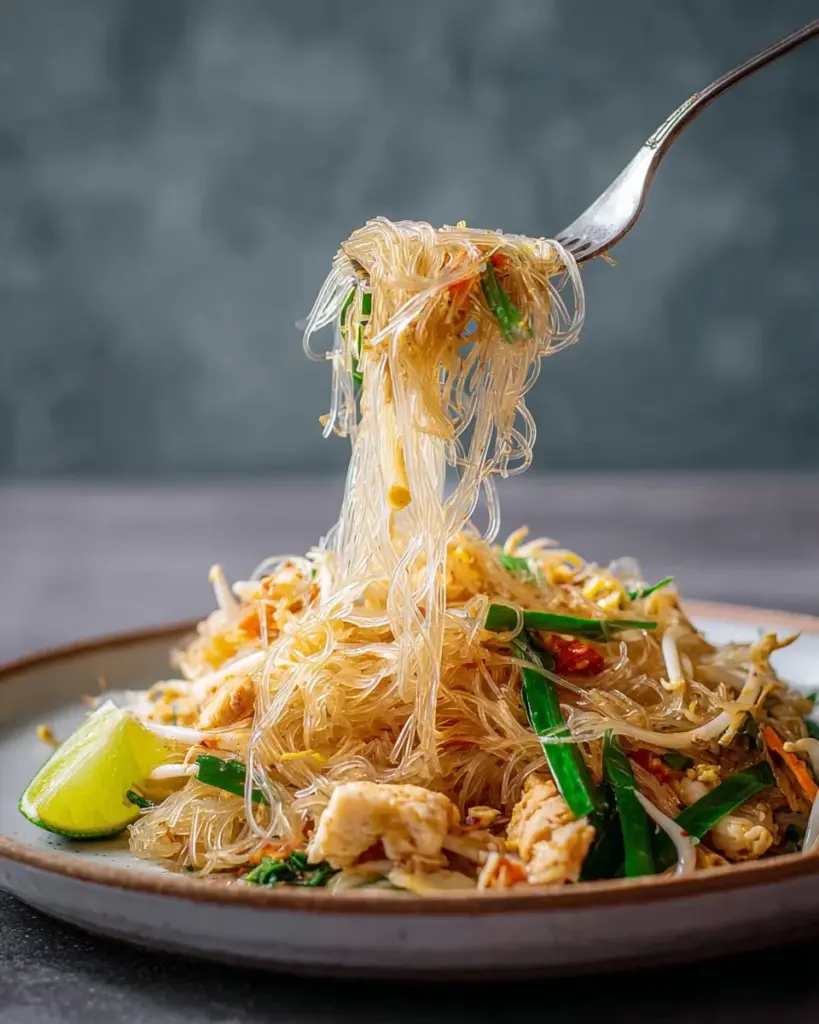
- Plate your dish and generously top with the remaining peanuts. Serve with a wedge of lime on the side for a zesty finish.
Notes
Leftover Pad Thai can be stored in an airtight container in the fridge for up to 2 days. For longer storage, freeze for up to a month. Make sure to soak noodles properly in advance to prevent sticking.